Showing posts with label conscious discipline. Show all posts

Thursday, November 7, 2019

Baby Doll Circle Time in Pre-KA

We are starting something exciting in our class. It’s called Baby Doll Circle Time! Baby Doll Circle Time is a curriculum created by Conscious Discipline designed to promote healthy bonding and social-emotional skills in infants and toddlers.

Once a week when we gather on the rug for our regular circle time, the children are met with a big basket of cute, lifelike baby dolls. The children are prompted to choose a doll for themselves. We sing:
 “Get your baby, get your baby,
 get your baby, time to play,” 
to the tune of “Oh My Darlin,” 
signaling the beginning of the playtime. Then the fun begins!
 There are five steps to Baby Doll Circle Time:
1. Transition to getting your baby
2. Beginning awareness
3. Connection
4. Cuddling and soothing
5. End and transition to next activity
The children will interact with their baby dolls in the same ways we interact with the children individually. If we play peek-a-boo, stop and go, or tickling games with your child, your child will play the same game with the baby doll. In doing so, the children re-experience that connection over and over again, helping to optimize their social-emotional development. Baby Doll Circle Time is based on scientific understanding of brain function. It taps into "mirror neurons," cells in the brain that allow for the transfer of emotions merely by observing them.


Soothing our babies
 When children act out gentle, loving behaviors with their babies, they, in turn, receive that attention as if an adult was doing it with them! This is a huge boost in empathy development and will help children form more caring relationships.

Friday, October 11, 2019

What Should Kitah Daled Hey Do? The Power of Choice


Reading What Should Danny Do?
Conscious Discipline is built on three premises: 1. Controlling and changing ourselves is possible and has a profound impact on others 2. Connection governs behavior 3. Conflict is an opportunity to teach. Kitah Daled Hey has demonstrated a true interest in exploring these premises through the What Should Danny Do? Book series. With these books the children exercise their superpower to choose how Danny controls and changes himself in a variety of situations and to see how these choices impact him and the people around him. The children connect with each other as they make choices for Danny and learn from conflicts that Danny experiences. One of our Kitah Daled Hey class commitments created by the children is "We are all superheros like Danny. We have the power to choose." We remind ourselves regularly of this commitment by asking and discussing What Should Kitah Daled Hey Do? We are even working on a book sharing positive choices Kitah Daled Hey can make.

"The Skill of Choices helps children choose compliance and facilitates their ability to focus on the task at hand.” -Conscious Discipline. One choice we made for Danny led to a class project for Kitah Daled Hey. After choosing that Danny should keep trying to make his volcano erupt and not give up and play with slime, someone observed that we didn't see Danny make his volcano. We paused to discuss how we could make our own volcanoes. The children’s suggestions included “with wood” “we can nail it” we can tear paper” “mud” “clay” “sticks” “rocks.” Someone brought up a potential problem: “but we don’t have a science room.” We problem solved together by discussing and thinking about if we need a science room and where we can do science. The children’s ideas included: “Outside. It’s messy” “in here” “everywhere.” Once we agreed that we do have a place to build volcanoes, we discussed what we could use to make them erupt. The children’s material list included “water” “food coloring” “vinegar” “soda” “measuring cups to make sure we have the right amount.” Next we asked Morah Jessica to make volcanoes with us in art. We observed pictures of real volcanoes, built volcanoes out of clay, drew our volcanoes, and even named them. After weeks of hard work, our volcanoes are ready to erupt. We are now experimenting with a list of materials suggested by children and morahs including baking soda, vinegar, yeast, water, hydrogen peroxide, dish soap, food coloring and glitter to discover which combinations make the best volcanic eruptions. We wonder which will wow us the most. After experimenting, Kitah Daled Hey looks forward to inviting other classes to see our volcanoes erupt. Through sharing our sense of wonder and strengthening our connection, our choice for Danny to not give up on his volcano continues to have a profound impact on us and others.
creating volcanoes

painting volcanoes


Thursday, September 19, 2019

Helping Hands

It's the beginning of the year which has us pondering, what do we want our class to be thinking about as they embark on a journey into a new classroom? How do we ensure a safe, happy, creative environment so everyone's language of expression is honored in a more soulful, natural way? By asking these questions, we are sure to set an intentional, mindful tone for our early learners.  Our goal is to provide a classroom environment that aids in learning, just as much as a Morah would. In other words, our classroom is also a teacher. So, our students should above all learn how to properly use materials, respect spaces and others in it, and be able to freely and openly express themselves through many ways of play and creation. How do we do this? Read on for heartwarming stories of how we blend rules/agreements and empathy.

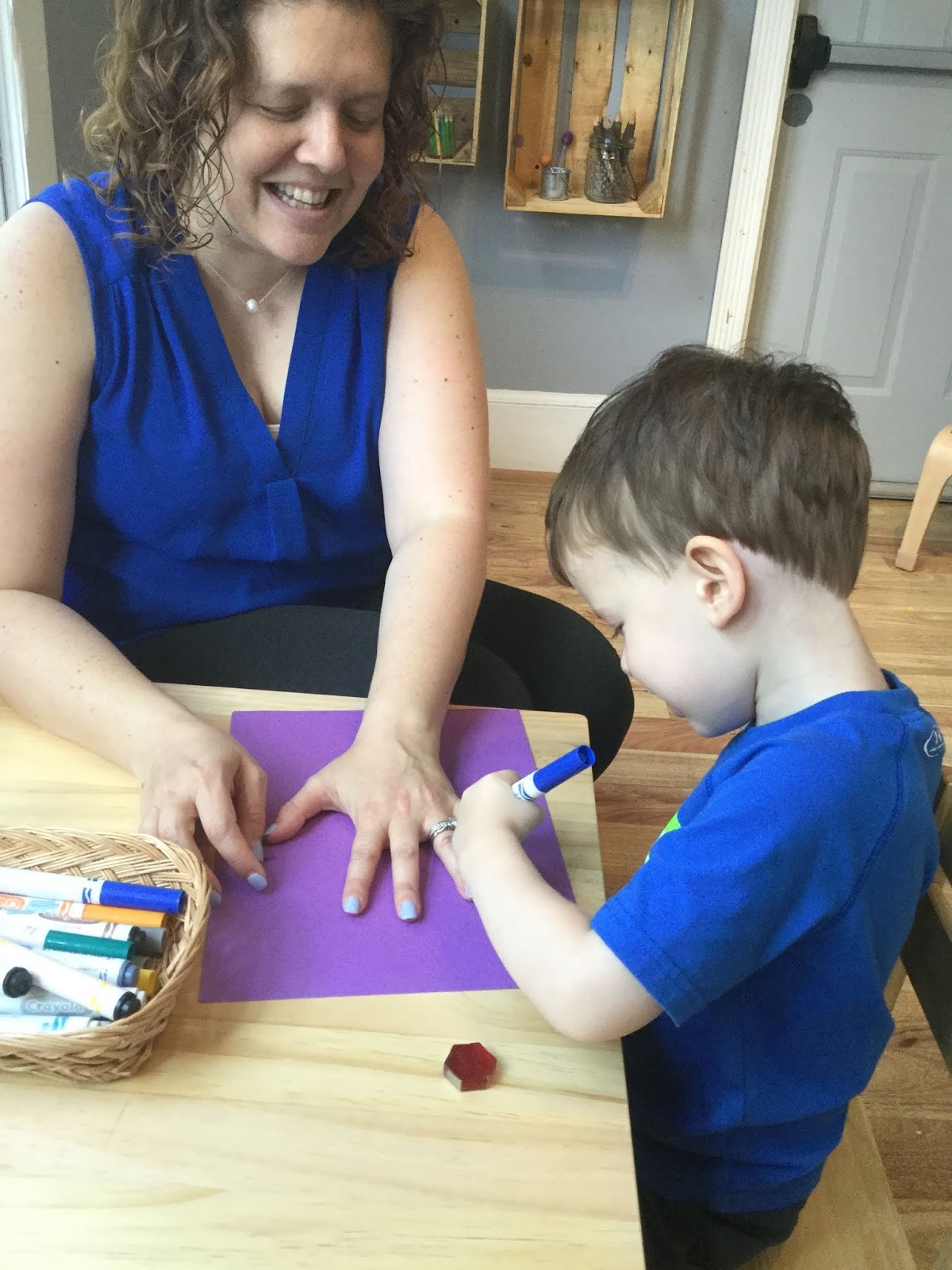
During our meet the teacher sessions we had parents trace their child's hands, this was our segue into talking about what our hands can do to be helpful. Here, parents have a hand in our project, strengthening our school family as a whole.


We cut the hands out and allowed the children to paste and paint at free will. Once we were finished and the artwork was dry, we invited the children to help us hang them up. Exercising free will, some chose to help while others allowed their friends to hang theirs because they were buys on another activity. Choices are always good to offer when appropriate. 

We've got our classroom routines down pretty well by now! Upon entering the building back packs get hung, lunch boxes and water bottles removed then placed into individual cubbies, then the children follow visual prompts to see what room they start in and what is open vs. what is closed.

Circle time is the optimum time to introduce classroom routines and rituals, along with any rules/agreements. We demonstrated how to carefully put our things away because we noticed clean up time became more of a demolition frenzy rather than mindful cleaning to be helpful.  We also made a mini classroom on a tray so children could reinforce what they are learning to do themselves.


See how helpful our friends are becoming? Holding doors, sweeping up messes so friends to slip, carrying something for another, working together, teaching each other new skills, and the list goes on.  By displaying our mitzvot (good deeds) in class through panels of documentation, books, and social games, we reinforce good behavior and provide references to refer back to from time to time.


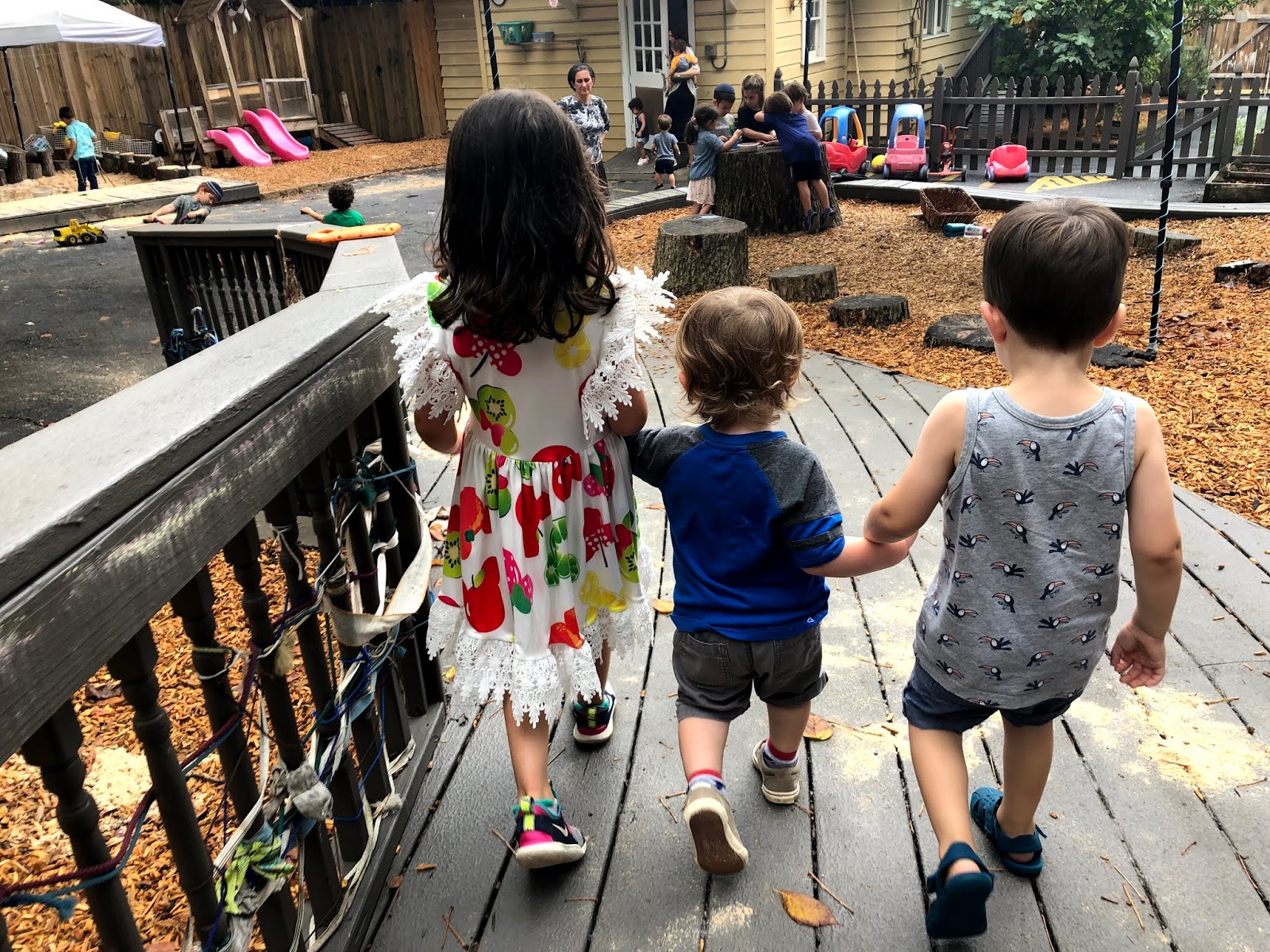
 How fortunate we are to have multiple sets of siblings attending our school. We see each other in the yard, celebrate reunions daily, and foster support through connection and role modeling.


By now we all have a good idea of how we best respect our friends and space. With a lot of patience, forgiveness and the assumption of positive intent, we are learning and growing together. According to conscious discipline, the creation of healthy connections with other people wires the brain for improved impulse control and a willingness to cooperate. We hope you enjoy our journey and can carry out these same methods at home or in your classroom. 

Wednesday, February 21, 2018

Putting It In Practice


 So, What Does It Look Like?  And How Can We Apply It?
(And what, exactly, do we mean by "it.")


     We were very fortunate to recently attend a Conscious Discipline conference here at school.  What do we mean by Conscious Discipline?  The "official" definition is:   Conscious Discipline® is a comprehensive social- emotional and classroom management program that uses everyday life events to teach children and adults self-control, conflict resolution, character development and social skills. Conscious Discipline® has been specifically designed to make changes in the lives of adults first. The adults, in turn, change the lives of children.

     How do we go about this?  How do we, as teachers--and parents--practice self-control, conflict resolution, character development and social skills?  Equally as important, how do we encourage our children to do the same?  (And, to give this over to our children, we need to work on acquiring this ourselves first.) 

     One step is by teaching the children to articulate their emotions.  The children are learning to "name" their emotions.  (Above, Dalia identifies sad and happy; below, Leah works with paper faces with a multitude of expressions.)
 (Below:  Avraham Chaim, and Harper,  investigate our books, people and mirror as they become familiar with a set of emotions.)
    
     The Morahs don't have to reinvent the wheel:  there is plenty of material for us to share with the children.  (Below, Morah Susan reads Shubert's Big Voice to the class. In  this story, Shubert learns that he must speak up when a classmate has intentionally offended him.  His teacher assists by providing him with the appropriate vocabulary.)
 
     This is the second time we have experienced the adventures of Shubert.  In Shubert's New Friend, Shubert's class teases a newcomer to the class.  Shubert's teacher comforts the teased child first, then models empathy, encouraging the class to do the same .  The class then successfully "rewinds" the situation, welcoming the new child appropriately.

     An important step in this process is breathing.  We practice inhaling and exhaling by using S.T.A.R. (Stop, (smile) take a deep breath and relax), Drain, Balloon and Pretzel. (Below, we share our interactive book about emotions and breathing.)
Emmett places his token with a facial expression in the book.
Above:  One of our Conscious Discipline books, I Can Calm which guides us to practice breathing, along with our breathing tool reminder.  
Above:  When I Feel helps us to identify our emotions. It reminds of our breathing techniques, too.  We shared this book earlier in the year; we are now revisiting it in Circle.  Shubert's Big Voice encourages us to be assertive, to make our needs known appropriately so we don't feel frustrated.  

     Want to learn more about Conscious Discipline?  Stop off at our Intown Jewish Preschool front office regularly to get a peek at our little--but mighty--calendar.  For each day of the year, there is some practical advice and valuable thoughts to carry you through your busy day.

The Morahs of Kitah Gimmel 


Friday, March 24, 2017

It's Funner Together in KB-3


It says it in all the books ;) "In most 2 year olds, parallel play is primarily seen in their play. As the children mature, they start to play with each other."

At the beginning of the year sharing, waiting our turn, negotiating and collaborating was difficult. As morahs, we did our best to guide, model and give  the children the tools to develop these skills. It is a delight to watch the shift happen within our classroom.


The above pictures are a peek at our KB-3 children playing together.They worked together building a magna-tiles castle. Some children held up the tower while other children added new squares. In another picture Shane and Annabel are taking turns throwing the ball to each other. Morning trays are usually a one person activity but often, the children ask to play together, they pull over a chair and make space  for each other and share. 

Morah Leah & Morah Kim