Welcome to our first school-wide blog! I am so happy to be back at IJP, catching snippets of your children's exploration and discovery with every step I take around the school. With all the exciting learning and growing going on in each class, I wanted to be your resident fly-on-the-wall and make sure you got the full scoop. Follow me as we dive into each class' unique investigations.
KA/KB 9-1, 9-3
The two youngest classes have jumped headlong into fall. Using the natural teaching materials provided by the great outdoors, the children are offered opportunities to explore their properties using as many senses as they can. Morahs have brought the outdoors in by collecting leaves, twigs and other found items to use in provocations.
KA/KB 9-1 used their natural fall materials in an open-ended shadow box activity. The morahs catered to the varying age-and skill-levels by presenting differentiated tools and mediums. Children could choose to squeeze glue bottles with two hands or use the daintier glue brush with which to attach their leaves. They could pinch pipettes filled with paint or pour the colors from small jars. With open-ended art experience like these, children employ creativity, problem-solving, muscle manipulation and receive multi-sensory exposure. As their brains mature, they also begin to develop a storyline behind their work.


In KA/KB 9-3, tiny fingers are building their muscle strength by engaging in fine motor table activities. Ordinary salad tongs become invaluable tools as the children grasp them with their whole hands to move large acorns from one spot to another in a recycled egg carton. Tweezers further zoom in on the smaller finger muscles to help children catch fall leaves to collect in a mason jar. These exercises are crucial prewriting skills and also develop hand-eye coordination. 


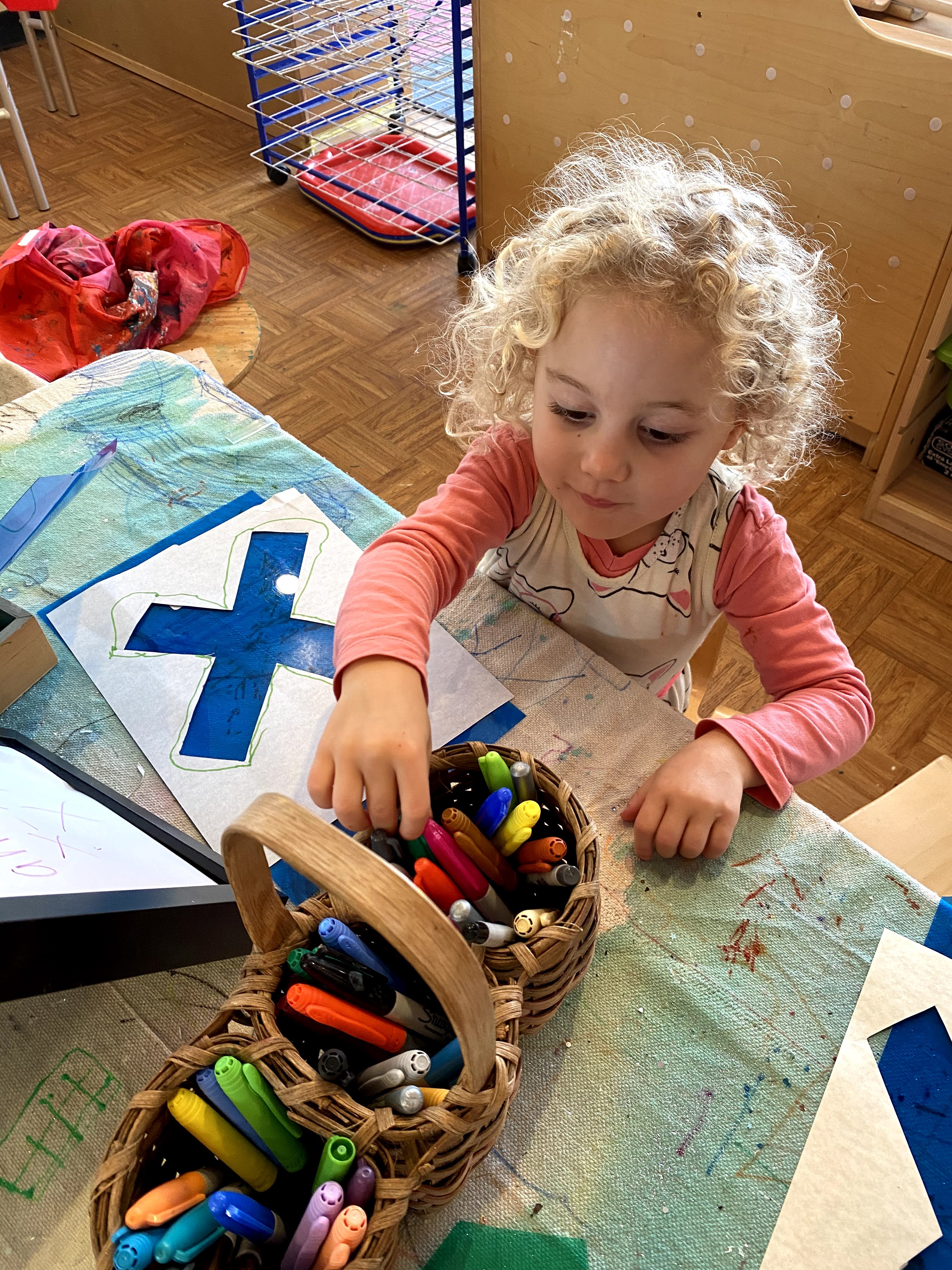
In KG/KD 9-1, the children are deep into some serious multidisciplinary learning. Letters, letters are everywhere - first the children followed their interests to pick the current letter of study - L! Fall leaf exploration is the perfect foil to examine the properties of straight-backed L. At the table, children have become familiarized with this lovely letter by tracing it, stamping inside it and gluing leaves. Look at those pencil grips! They have also stretched rubber bands to form the shape, a tricky fine motor exercise. On the rug, children move their bodies to form different letters, highlighting the first letters of their names. Giving children opportunities to experience a subject in varied ways speaks to the child's multiple intelligences, allowing him or her to personalize and better retain the information.


KG/KD-9-3
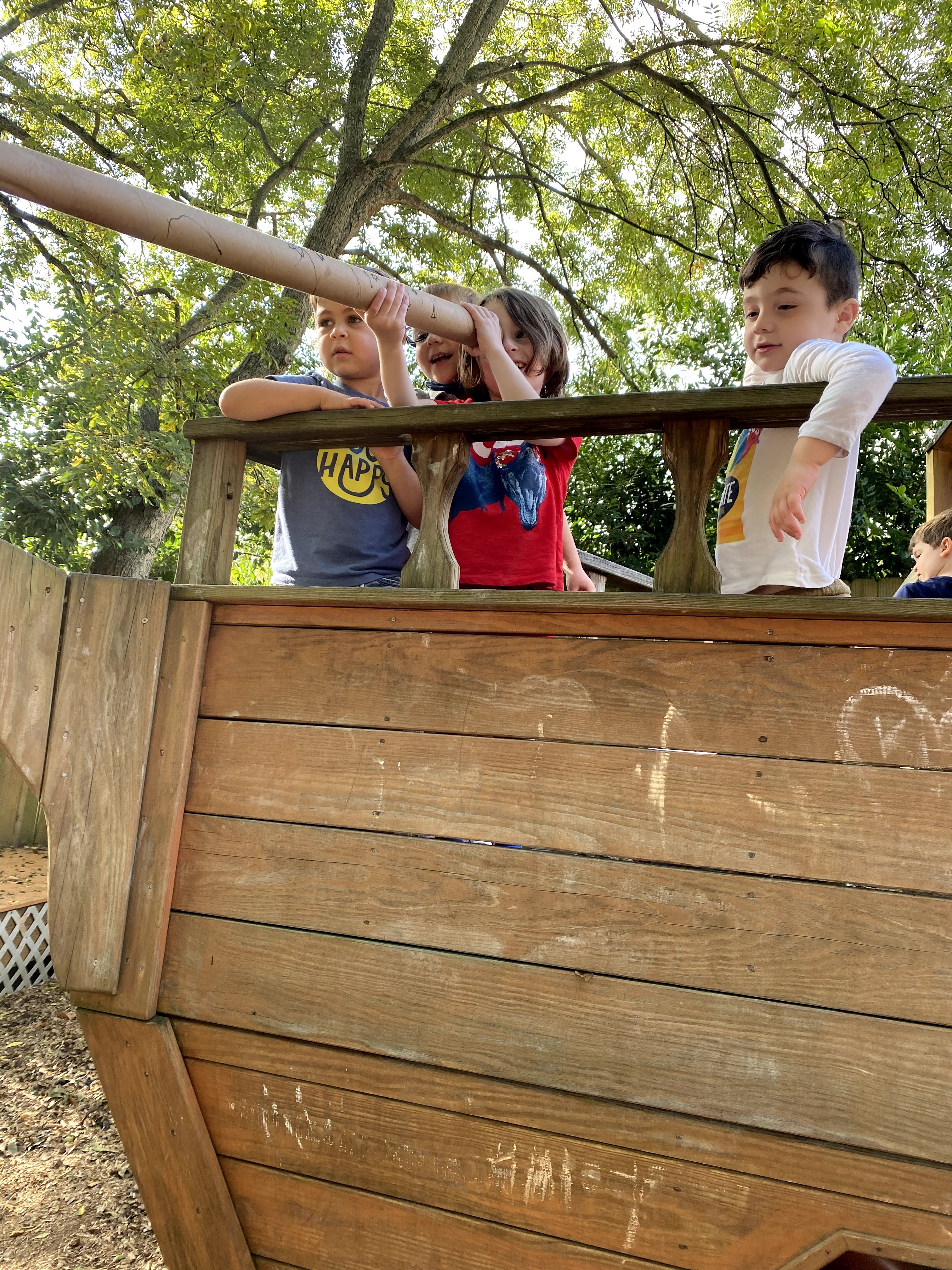
The children in KG/KD-9-3 have been fusing their interest in literacy with their creative and social-emotional skills by entering the rich world of dramatic play. Within the framework theme of pirates and explorers, the group created their own apparel after researching the history of these famed characters. Then they dove into maps - how they're used to represent physical space and communicate that with the reader - and then did some map making of their own. Together they engaged in a scavenger hunt around the school to find objects that began with the same letter as their names. This is a great example of child-led learning: following the children's initial interests, the morahs built on their initial foundation to include a multitude of important life skills. Dramatic play strengthens children's interpersonal interactions as they negotiate roles and responsibility, and adding letter recognition and writing practice is a great way to incorporate literacy. Designing and following maps hones spatial awareness and meaning in print. 


KH
Kitah Hay also created a multidisciplinary experience by opening their very own cookie stall, "The Cookie Crust." The children worked collaboratively to bake the cookies, create signs and slogans, and run the operations successfully. This project combined a plethora of important skills including math, social cooperation, literacy, creativity and life skills.
First, they worked together to make the cookie dough. Following recipes is a real-life application of sequencing, and also includes math skills as they implement fractions. More math was applied in the actual transaction - when customers came to purchase their cookies, cookie shop "employees" calculated the amount of change, and tallied up their earnings. Designing the signs tapped into the children's artistic expression and emphasized literacy as they agreed on a brand name and wrote the words themselves. They even dreamt up their own slogan: ‘Cookies make you happy!’ 


Stay tuned for more insights into the fun and learning happening every day at IJP!